The Enterprise Guide to Agentic Search, Generative Engine Optimization (GEO), and AI Governance
B2B buyers rely on AI agents to draft vendor shortlists. Discover the 17-point roadmap to capture share in agentic search while protecting intellectual property.
Enterprise search has crossed a critical threshold. The era of optimizing strictly for ten blue links and keyword rankings is over. Today, decision-makers, procurement executives, and site selectors no longer parse search engine results pages (SERPs) manually; they rely on autonomous AI agents, Google AI Overviews, and multimodal foundation models (ChatGPT, Gemini, Claude, and Perplexity) to synthesize recommendations and draft vendor shortlists.
If an enterprise is not structured for machine-to-machine extraction and verified generative citation, it simply does not exist in the modern buyer's journey.
Drawing from a recent strategic blueprint developed for a global industrial engineering firm, this guide outlines the comprehensive 17-point operational framework every enterprise must implement to capture market share in agentic search while protecting core infrastructure and intellectual property.
The Behavioral Science: Modernizing the 7-11-4 Trust Framework
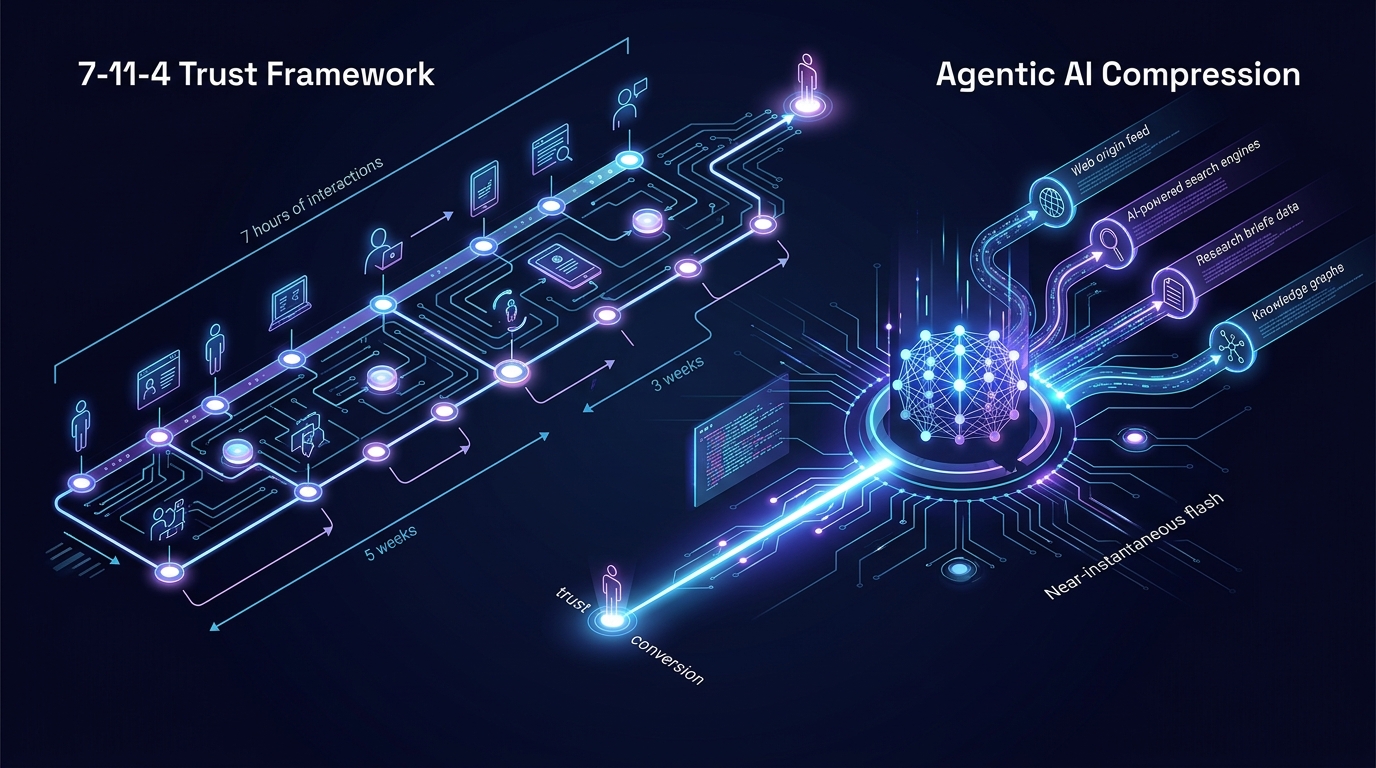
Enterprise B2B purchasing decisions have always required sustained trust. In traditional digital strategy, this is defined by Daniel Priestley’s 7-11-4 Trust Framework (validated by Google's Zero Moment of Truth research):
- 7 Hours of cumulative engagement with content and case studies
- 11 Touchpoints across the buying lifecycle
- 4 Distinct Locations/Channels of brand presence
The 2026 Shift
AI models now compress this entire multi-week research journey into seconds. When an enterprise executive prompts Gemini or ChatGPT for a vendor shortlist, the model conducts a synthetic 7-11-4 evaluation across its training data and real-time retrieval indexes.
To win generative shortlists, your brand must systematically populate all four core digital vectors:
- Owned Web & Origin Codebase (Clean markup, machine endpoints, sandboxed APIs)
- Search Engine & Multimodal AI Ecosystems (GSC entity alignment, Gemini SRT indexing)
- Data-Dense Technical Channels (Research-backed technical briefs, high-information-gain media)
- Machine-Readable Knowledge Graphs (Linked data, schema graphs,
/llms.txt)
The 17-Point Enterprise AI & Agentic Search Roadmap
Phase 1: Edge Infrastructure & Ingestion Readiness
01. Hosting Stack & Edge WAF AI Audit
Before an enterprise can rank in AI Overviews or conversational engines, it must ensure it is not silently blocking the very bots conducting live search retrieval.
The Hidden Edge Block: Edge firewalls and CDNs (Cloudflare, AWS WAF, Imperva) frequently enable default "Block AI Scrapers and Crawlers" toggles. These firewalls execute at the DNS edge, silently serving 403 Forbidden or interactive CAPTCHAs before requests reach origin servers.
Live Retrieval vs. Bulk Training: Webmasters must differentiate between bulk data scrapers (e.g., CCBot) and live user-directed retrieval bots (e.g., ChatGPT-User, Perplexity-User, Claude-User). When a live prospect asks an AI engine for a vendor recommendation, blocking live retrieval bots guarantees total exclusion from the synthesized response.
The robots.txt Fallacy: An open robots.txt file is useless if edge proxies drop the connection prior to reading root files. Full DNS and WAF auditing is required to create explicit allowlists for verified AI retrieval user-agents.
02. Deploying Root /llms.txt and /llms-full.txt Endpoints
Modern LLM web crawlers operate under strict context-window and compute constraints. Standard HTML pages bloated with visual scripts, styles, and tracking pixels consume excessive token budgets.
- Deploy standardized
/llms.txtand/llms-full.txtmarkdown manifests at your domain root. - Structure these files with clean, token-efficient summaries of enterprise capabilities, sector divisions, executive leadership, technical specifications, and key project metrics.
03. Browser-Native WebMCP (Model Context Protocol) Implementation
Web search is shifting from passive reading to active tool calling. Implement declarative WebMCP schemas across transactional and functional modules (e.g., project budget estimators, regional facility locators, pre-qualification forms). WebMCP translates frontend forms into structured functions that autonomous procurement agents can call directly without having to visually parse or scrape interface code.
04. Agentic Checkout & Universal Commerce Protocol (UCP)
For standardized service packages, compliance certifications, training modules, or commercial transactions, integrate backend hooks supporting Google's Universal Cart and Agentic Checkout protocols. This allows enterprise procurement bots to initiate structured orders or booking requests directly within conversational search sessions.
Phase 2: Search Authority & Generative Answer Optimization
05. Google Search Console Social Profile Association
Link all verified enterprise channels (LinkedIn, YouTube, X, Facebook) directly inside Google Search Console. This explicitly binds distributed brand signals into Google's Knowledge Graph, preventing AI engines from hallucinating relationships or citing unverified secondary channels.
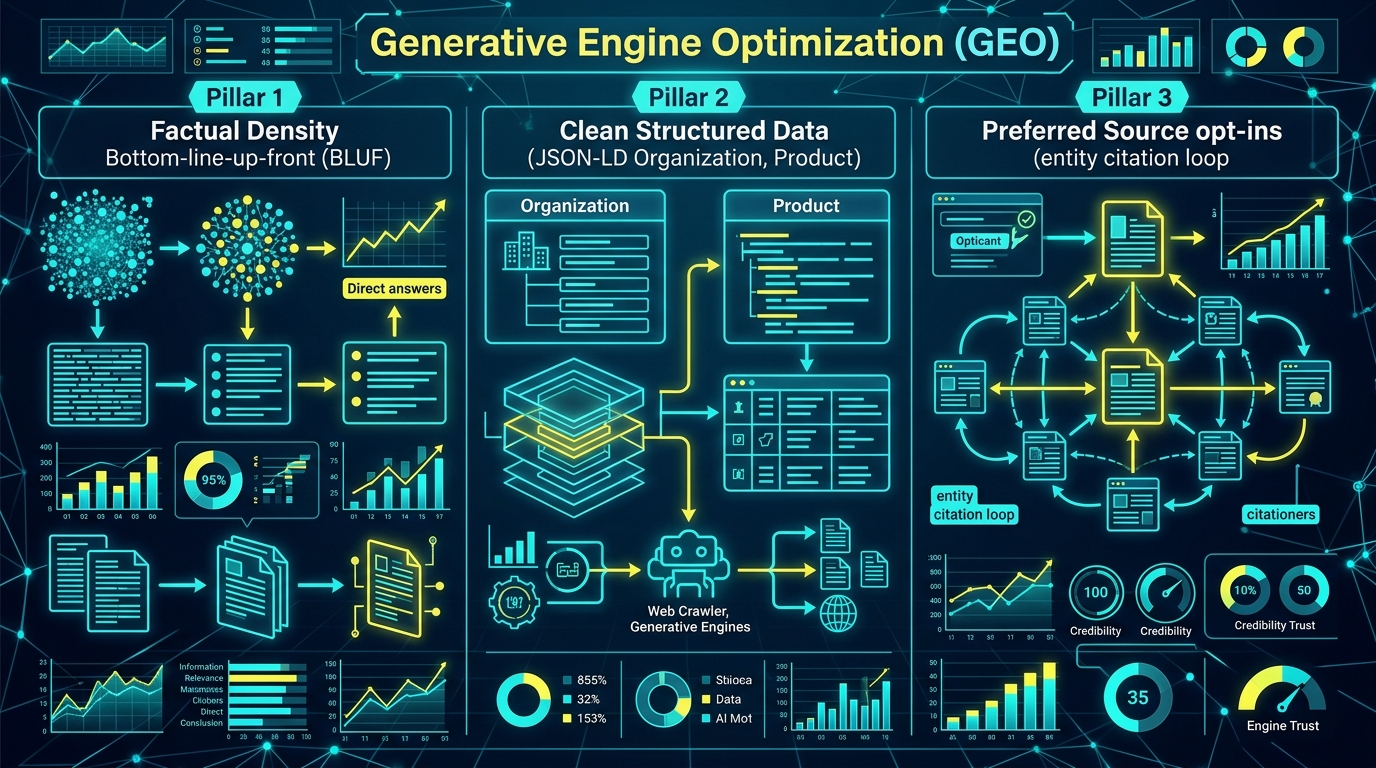
06. Google 'Preferred Source' Opt-In Integration
Google expanded its Preferred Sources functionality directly into Google AI Overviews and AI Mode. Deploy preferred source opt-in triggers across key customer-facing surfaces (footers, white paper resource centers, newsletters) linking to: https://www.google.com/preferences/source?q=allcleardigital.com.
When enterprise clients and partners mark your brand as a Preferred Source in Google, your domain receives priority citation inclusion and a visible "Preferred" trust badge inside AI Overviews, driving a measurable ~2x increase in click-through rates.
07. YouTube Shorts with Keyword-Rich SRT Transcripts
Multimodal search models index spoken audio and video keyframes natively. Produce high-cadence short-form video breakdowns of technical innovations, safety standards, and project case studies. Supply full, synchronized SubRip Subtitle (SRT) text files embedded with technical domain keywords. Google Gemini parses these text timestamps to serve exact video chapters directly inside search AI Overviews.
08. Technical, Keyword-Driven Social Optimization
Replace generic corporate PR updates with high-density technical briefs rooted in search-demand data. LLMs crawl and index social platforms (particularly LinkedIn) in near real-time. Structured, technical updates provide fresh contextual grounding that models ingest to evaluate enterprise authority.
09. Converting Top Search Console Queries to AEO Phrasing
Audit high-impression, question-based search queries inside Google Search Console (e.g., "cost per sq ft cleanroom construction", "cold storage automation requirements"). Re-architect target landing pages using Bottom-Line-Up-Front (BLUF) phrasing. Providing direct, definitive answers in the opening 1–2 sentences wins zero-click answer boxes and AI overview citations.
10. Generative Engine Optimization (GEO) for B2B Shortlisting
B2B buyers frequently prompt LLMs to build exploratory vendor matrices. Convert narrative case studies and white papers into machine-parseable data tables outlining delivery methods, facility square footage, budget scales, and industry certifications (LEED, ISO). Models heavily favor structured table extracts when generating shortlists.
11. Nested Enterprise JSON-LD Schema Graphs
Upgrade basic schema to a fully connected JSON-LD Organization graph. Define nested relationships for parent conglomerates, regional subsidiaries, specialized operating units, corporate leadership, and localized physical entities to ensure zero ambiguity in foundational knowledge bases.
12. Multimodal Portfolio Metadata Enrichment
Audit visual project portfolios, architecture galleries, and engineering blueprints. Implement structured machine-readable metadata, precise geolocation tags, and technical descriptions so visual and multimodal models accurately identify your physical assets in visual search queries.
13. Global Knowledge Sync Across Secondary AI Indexes
Synchronize corporate locations across secondary data layers feeding regional AI lookup models (Apple Maps, Bing Places, TomTom, HERE, and industrial B2B registries) to guarantee geographic consistency in agentic lookups.
Phase 3: Security Governance, Telemetry & Organization Enablement
14. Subcontractor, Agency & Consultant AI Governance Policy
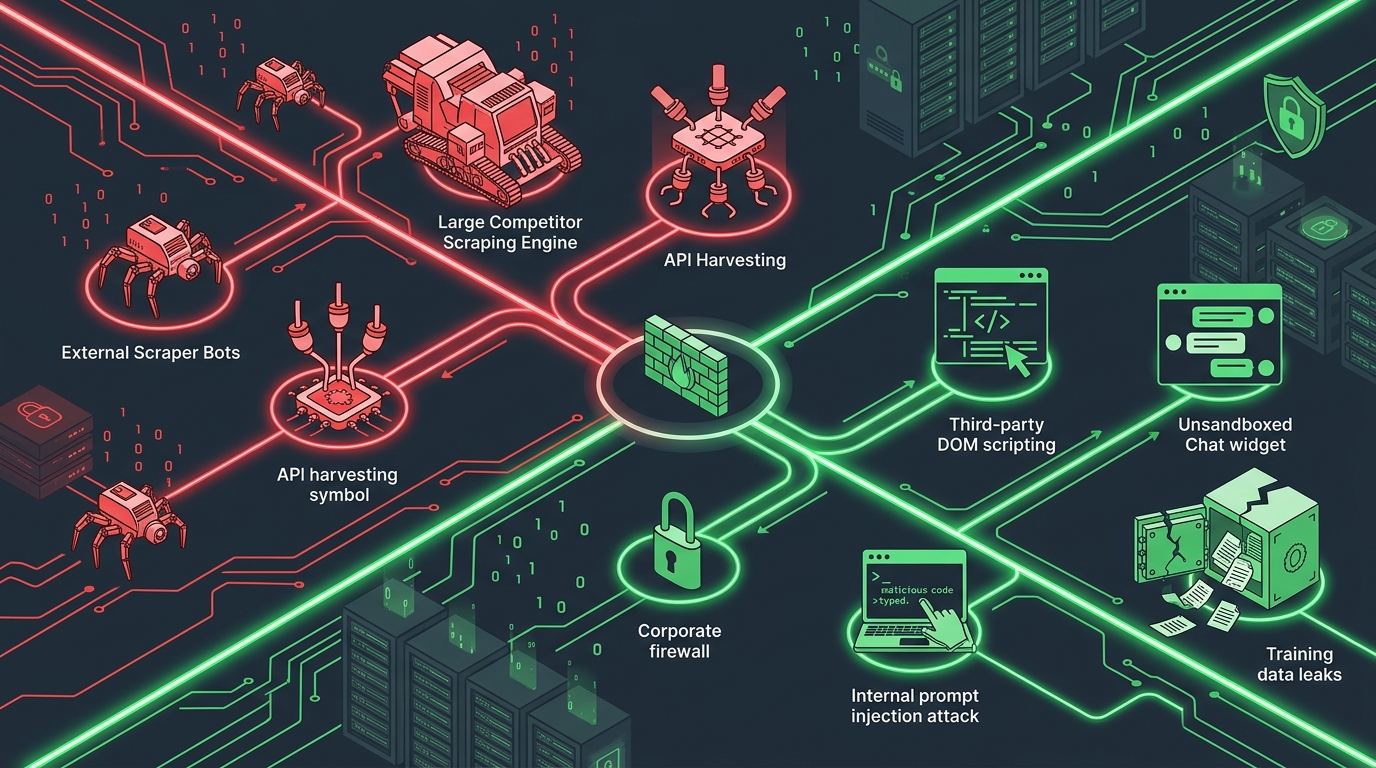
As external partners, subcontractors, and marketing agencies deploy automated AI tooling, enterprise infrastructure is exposed to new vulnerabilities. The Dual Threat Model is detailed below:
- Vector 1 (Outside-In): Outside trade partners running bots that scrape bidding systems, pricing formulas, and proprietary engineering logic at scale.
- Vector 2 (Inside-Out): Marketing teams installing unvetted third-party chatbots or developers connecting automated SEO crawlers (via CMS Application Passwords/REST APIs). Unsandboxed scripts can read the browser DOM, intercept confidential form submissions, and transmit internal data to train commercial public LLMs.
Mandated Guardrails:
- Strict DOM sandboxing using Content Security Policies (CSP) and isolated iframes.
- Token-based authentication (OAuth 2.1 / MCP standards) with short-lived, read-only scopes.
- Mandatory Zero Data Retention (ZDR) agreements legally preventing vendor models from retaining enterprise data.
The Prompt Injection Reality: Modern AI research confirms there is no 100% foolproof protection against prompt injection attacks. Security posture must rely on multi-layered defense: strict network isolation, input sanitization, minimal sensitive data exposure, and continuous human oversight.
15. AI Reputation, Share of Model & Hallucination Auditing
Transition standard search tracking to generative brand equity measurement. Isolate your share of mentions, rate of generative inclusions, and hallucination rates across model iterations:
| Core Metric | Definition & Focus |
|---|---|
| Share of Model (AI Share of Voice) | Percentage of total brand mentions an enterprise commands versus primary global competitors across category prompt sets. |
| Rate of Inclusion | The percentage of AI Overviews and conversational model answers where the brand is recommended for non-branded capability queries. |
| Direct Citation Share | The proportion of AI-generated source links pointing directly to your owned domain versus secondary aggregators or news outlets. |
| Entity Accuracy Rate | Continuous auditing to flag and eliminate outdated facts, defunct subsidiary names, or model hallucinations in generative answers. |
16. Custom Looker Studio Telemetry, GA4 & Search Console Infrastructure
Generative search performance cannot be measured using default Google Analytics setups.
- GSC Generative Tracking: Isolate AI Overview impression performance by URL to identify which assets serve as ground truth for search models.
- GA4 Regex Channel Groupings: Build custom tracking dimensions in GA4 to isolate referral traffic, form completions, and conversion value originating from generative engines (
chatgpt.com,claude.ai,perplexity.ai,copilot.microsoft.com). - Executive Dashboards: Synthesize model visibility scores, citation volume, and inbound generative conversions into unified Looker Studio reporting for leadership teams.
17. Executive Enablement & Internal Team AI Training
An enterprise cannot execute an agentic search transformation in a silo. Success requires systematic training across business units:
- Executive Leadership Briefings: Quarterly translation of generative visibility shifts, explaining how AI discovery directly impacts high-value pipeline generation.
- Content & PR Staff Enablement: Coaching content creators to write for information gain, implement structured entity schemas, and optimize media for multimodal search indexing.
- Secure AI Workflows: Training estimators, sales reps, and technical staff on strict AI data-handling boundaries to prevent intellectual property leakage into public foundation models.
Moving Forward: Operationalizing Agentic Search
The transition from keyword rankings to AI synthesis is not a future projection—it is the operational reality of enterprise discovery today. Organizations that build the infrastructure for machine readability, secure their digital perimeter against unvetted bots, and systematically track their Share of Model will dominate enterprise procurement across every generative engine.
Frequently asked questions
What is Generative Engine Optimization (GEO)?
GEO is the process of optimizing website content, schemas, and API endpoints to ensure visibility and citation inclusion in AI search engines and LLM-synthesized answers.
What is the 7-11-4 Trust Framework in AI search?
Traditionally requiring 7 hours of interaction, 11 touchpoints, and 4 locations, AI agents now compress this evaluation into seconds by synthetic crawlers querying digital vectors.
How do edge firewalls affect AI search indexing?
Many edge firewalls (like Cloudflare or AWS WAF) block AI user-agents by default, preventing live retrieval bots from reading the origin codebase during user queries.